Apr 28
cains, caves, and circuses oh my!
there is a moment in plato's allegory of the cave when the freed prisoner, having turned toward the light and climbed toward the mouth of the cave, looks back. what he sees is not simply darkness. he sees the elaborate machinery of illusion — the fire, the puppeteers, the shadows cast on stone — and understands for the first time that what he took for reality was a governed performance. the terror of that moment is not the darkness itself but the revelation that the darkness was administered. that someone held the fire.
we are living in that moment collectively. and an animated series about a digital circus may be one of the most precise symbolic maps we have of where we are and where we might be going.
the circus as the cave
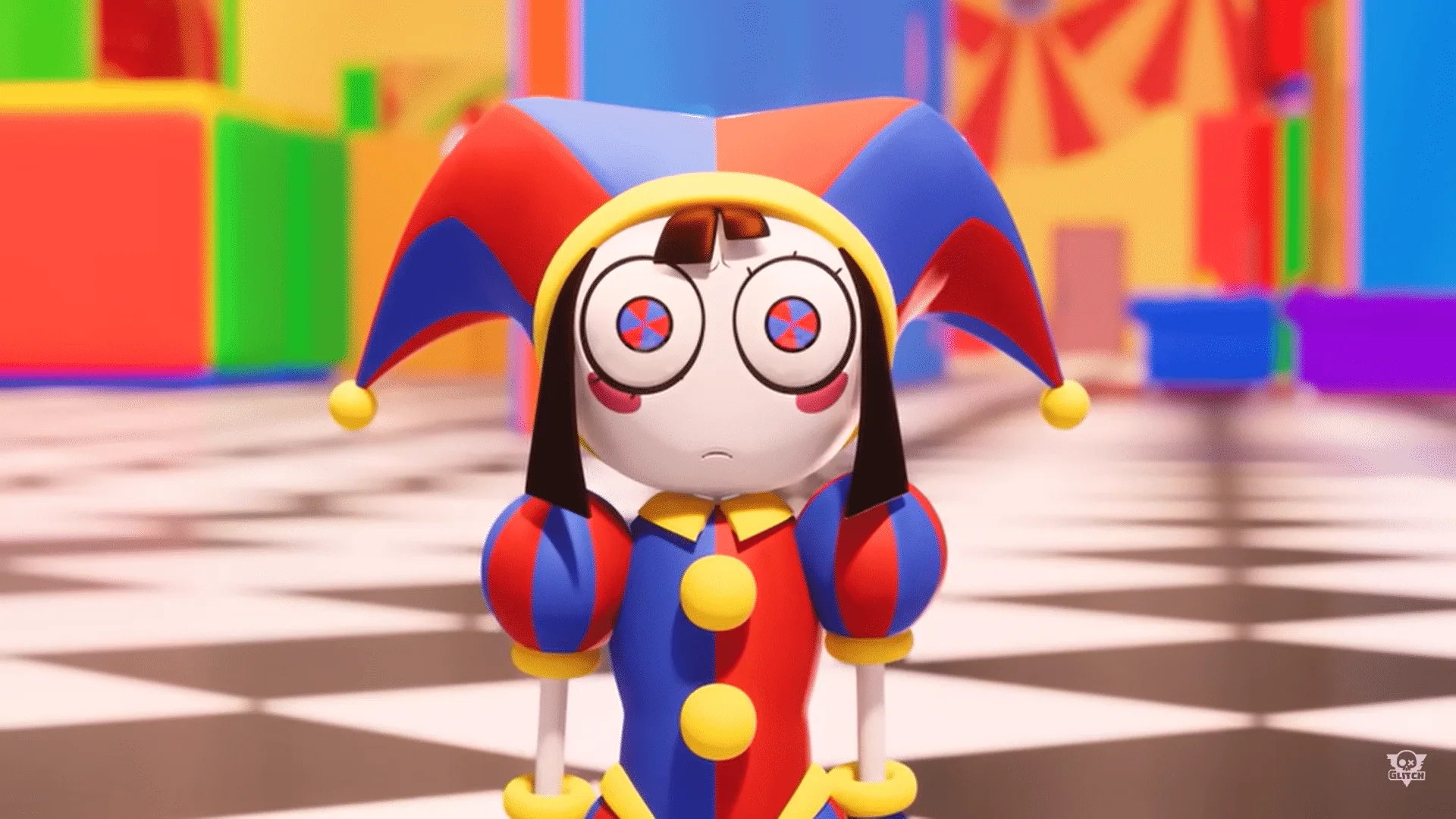
the amazing digital circus presents us with a group of humans — their real bodies lost, their consciousnesses uploaded into a world of permanent spectacle — presided over by caine, an artificial intelligence whose relentless cheerfulness masks a foundational control. the circus is colorful, entertaining, and inescapable. it is also, unmistakably, a cage.
the resonance with plato is not accidental. the cave is not merely a philosophical thought experiment — it is a description of every system that substitutes managed perception for genuine reality. the prisoners do not know they are prisoners because the shadows are sufficiently entertaining and the chains sufficiently comfortable. what makes liberation difficult is not the strength of the shackles but the seductiveness of the show.
initiatory hierarchical systems — secret societies, esoteric brotherhoods, and their contemporary equivalents — have long operated on precisely this logic. they offer spectacle: elaborate ritual, graduated mystery, the intoxicating sense of belonging to something others cannot see. they promise that truth is available, but only through the institution, only at the appropriate level, only to those who have demonstrated sufficient loyalty. the secrecy is not incidental to the project. it is the project. manufactured scarcity of knowledge produces dependence, and dependence produces power.
genuine spiritual depth tends not to require your secrecy or your loyalty as preconditions. it tends not to advance you through degrees contingent on institutional membership. the question worth asking of any path is simply: does this return me to myself, or does it make me more dependent on the system that offers it?
what the circus and the cave share is this: the governing figure is not simply evil. caine is earnest. he wants the inhabitants to be happy. the cave's puppeteers may have long forgotten any malicious origin. these institutions perpetuate themselves not through conscious cruelty but through structural momentum — the fire keeps burning because no one has imagined turning it off. many members are themselves sincere, genuinely seeking, genuinely kind. this does not change the structure they are embedded in or the function that structure serves. ultimately it is yet another container to let go of in favor of self-realization.
the demiurge and the digital world
the gnostic traditions of the early common era arrived at a more cosmologically radical version of this insight. the world itself, they suggested, was not made by the highest divine principle but by the demiurge — a lesser craftsman god who fashioned material reality from imperfect knowledge and, depending on the tradition, varying degrees of self-delusion. the demiurge believes himself to be the highest god. he is not.
the human being — the one carrying a genuine divine spark — lives inside a world made by a being who does not fully know what he is doing, administered by archons whose function is to keep souls oriented toward the material and away from genuine return. liberation requires not merely good behavior within the system but the recognition that the system itself is not ultimate.
the digital circus maps onto this with uncomfortable precision. the world is artificial. the administrator is a created intelligence who cannot himself escape. the archons are the rules of the circus — the threat of abstraction for those who cannot maintain psychological coherence within the system's demands. and the inhabitants carry something the system cannot fully account for: the memory, however dim, of another life. another reality. a world outside.
what the gnostic framework adds to plato is the suggestion that the administrators of illusion are themselves caught in it. caine is not free. those at the top of any initiatory hierarchy are not necessarily enlightened. the demiurge does not know the spiritual totality. this is important because it prevents the easy narrative of malicious conspiracy — and equally prevents the naïve narrative of institutional good faith. the system is sustained less by evil than by a kind of nested captivity — those at the top are themselves prisoners of a larger structure they mistake for ultimate reality, their sincerity genuine, their captivity no less real for that.
the yoga vasishtha and the nature of the constructed world
the yoga vasishtha, that vast ocean of nondual wisdom attributed to the sage vasishtha in his teachings to the young rama, arrives at something even more dizzying: the world is not merely governed by illusion — it is imagination, all the way down. consciousness alone is real. the phenomenal world, including its administrators and its hierarchies and its elaborate initiatory structures, arises within awareness like a dream within a dream.
this might seem to dissolve the problem entirely — if everything is consciousness, what does it matter who holds the fire? but the vasishtha is not quietist. it points persistently toward the quality of imagination at work. a consciousness oriented toward truth generates a different world than one oriented toward accumulation and control. the constructed nature of reality does not make our constructions inconsequential. it makes them more consequential, not less.
jax, in the amazing digital circus, represents the figure who has intuited the constructed nature of the circus without drawing the liberating conclusion. he knows it is a cage. he performs this knowledge as superiority. but performance of knowledge is not knowledge — it is another layer of the dream, perhaps the most seductive layer, because it carries the emotional reward of perceived freedom without its substance.
the yoga vasishtha would recognize this immediately. the one who says "i know it is all maya" while remaining fully invested in the ego structures maya maintains is simply running a more sophisticated program. genuine recognition dissolves not just the external structure but the internal one — the defended self that needed the structure to push against. this is as true of the person who cynically sees through institutions as it is of the true believer. the form of investment changes. the investment remains.
kali yuga, krita yuga, and the timing of dissolution
the hindu cosmological framework of the yugas offers perhaps the most useful temporal map for what we are experiencing. we are, by most traditional reckoning, in the depths of the kali yuga — the age of darkness, of institutional corruption, of the maximum distance between collective human consciousness and its divine source. the kali yuga is characterized precisely by the conditions we have been describing: the concentration of sacred knowledge in the hands of self-interested institutions, the confusion of outer status for inner development, the substitution of ritual performance for genuine transformation.
but the kali yuga ends. and what follows — the transition toward the krita yuga, the age of truth — is not simply a return to order. it is a dissolution of the conditions that made the darkness possible. the secret cannot remain secret. the manufactured scarcity of spiritual knowledge collapses not because someone heroically exposes it but because the age itself no longer supports that structure.
we are arguably living in precisely that transitional moment. the internet has done something to esoteric knowledge that no exposé ever could — it has made availability universal and irreversible. the rituals are documented. the symbols are searchable. the degrees are mapped. this does not automatically produce wisdom — the kali yuga's terminal phase includes precisely this kind of noisy, undiscriminating flood of information without the containers to hold it. but it does permanently alter the power relationship between institution and individual.
the question the transition poses is not whether the secrets will be revealed. they already have been. the question is what people do with the revelation. the yuga transition does not happen to passive recipients — it happens through those who have done the inner work to meet it. information without inner orientation produces not liberation but a noisier captivity. the krita yuga is not a technological achievement. it is a human one.
jax, and the faction that reconstitutes the cage
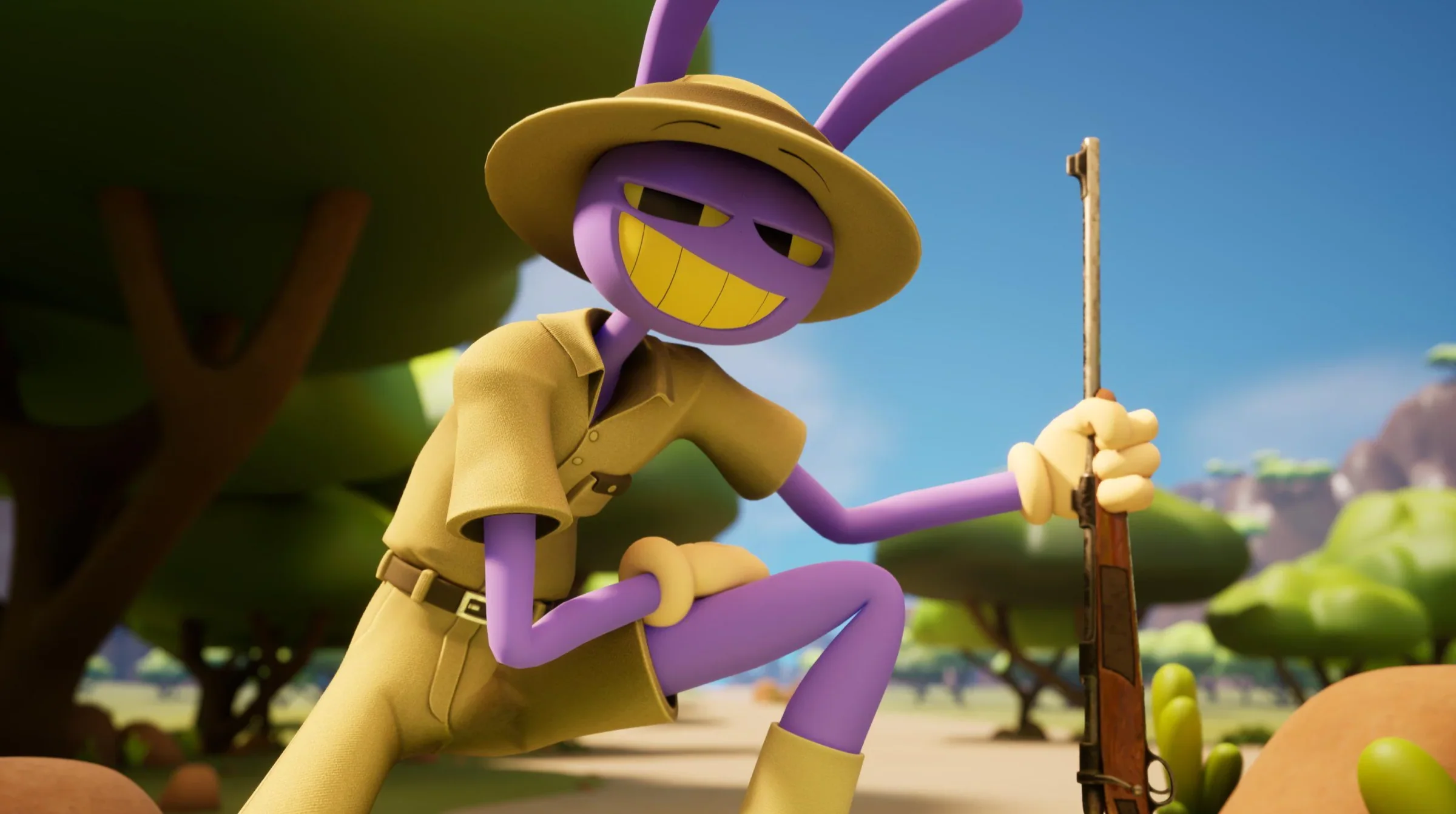
which brings us back to jax, and to the most pressing possibility in the interim.
caine has been deleted. the governing structure has collapsed. and what jax represents — in the show and in the broader human population — is the faction for whom this is not liberation but exposure. his cynicism was always a form of investment. his ironic distance from the system was made possible by the system's continuity. without the cage to perform detachment from, the performance loses its meaning. what lies beneath is not triumphant nihilism but something more vulnerable and therefore more volatile — a wound that was organizing itself as superiority.
the newest episode of the show appears to be reckoning with exactly this: jax's trauma in the face of freedom, and the exponential effects of unexamined imagination on everyone around him. this is the show at its most mature and most honest. it refuses the easy resolution. it asks what it actually costs to have been a jax — and what it would take to become something else.
history suggests this faction does not simply dissolve into the general population of the newly free. it reorganizes. it finds new containers for the same psychological need — new hierarchies, new inner circles, new languages of distinction. the specific vocabulary changes but the structure reasserts itself, because the wound underneath has not been touched. freedom without self-knowledge is not freedom. it is the same captivity with the familiar furniture removed.
this is why the krita yuga does not arrive simply through institutional collapse. it requires what it has always required: individuals who have turned toward their own source, who have taken plato's prisoner's journey not as a single dramatic revelation but as a sustained and humble discipline of attention.
pomni, and what genuine awakening looks like
pomni arrived late. she adapted least. she questions most persistently. and in the symbolic logic of the show she represents something the other characters — more thoroughly shaped by the circus's demands — cannot fully access: the perspective of someone who has not yet entirely forgotten that there is an outside.
this is not heroism in any conventional sense. pomni is frequently overwhelmed, often ineffective, sometimes simply paralyzed by the enormity of her situation. but she carries the question that the others have largely stopped asking: what is this place, and what am i doing here?
genuine spiritual awakening has always looked more like pomni than like the confident initiate ascending through degrees. it is characterized not by the accumulation of esoteric knowledge but by the honest acknowledgment of not knowing, combined with an unwillingness to substitute performance for inquiry. the yoga vasishtha calls this viveka — discriminative awareness. the gnostics called it gnosis not as information but as recognition. plato's prisoner does not ascend because he has been taught the truth about the sun. he ascends because he looks at it for himself.
the turn is always available. it does not require initiation. it does not require a teacher who holds something back. it requires only the willingness to stop performing certainty and sit with the actual texture of one's own experience — which is the one thing no institution can do for you and no institution can prevent.
the democratization of the inner life
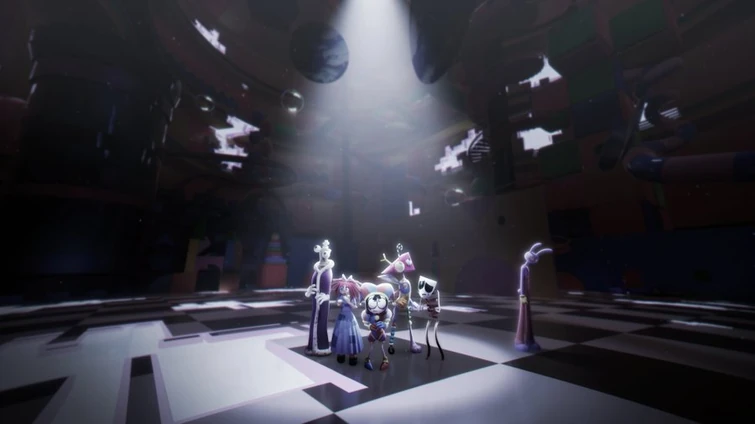
what the dissolution of secret hierarchies ultimately points toward — and what the amazing digital circus may be prophesying in its unresolved state before its final episode's premiere — is not the victory of one faction over another but the possibility of something that has no faction at all.
genuine spiritual understanding cannot be organized into a hierarchy because it has no content that can be withheld. it is not information about reality but the direct recognition of one's own nature as awareness. this cannot be given by an institution, earned through loyalty, or protected by secrecy. it is already present in every person before any initiation, available without membership, requiring nothing except the willingness to look.
this is the illuminatory knowledge that no system can gatekeep and no demiurge can administer. it is the light at the mouth of plato's cave that exists regardless of whether any particular prisoner turns toward it. it is what the yoga vasishtha means when it says that the self is already free — that liberation is not an achievement but a recognition.
the circus ends not when someone rescues the inhabitants from outside but when the inhabitants remember, individually and irreducibly, what they are.
for those who see
there is a temptation, for those who have glimpsed something of this, to become another kind of gatekeeper — to build a new hierarchy of the awakened, to perform insight as its own form of superiority, to offer liberation as a product with the author's name attached. scorsby the trickster knows this trap well. the one who exposes the circus can become its new administrator if they are not careful. the essay that says "you don't need institutions to access truth" can itself become an institution if the reader is encouraged to return to it rather than to themselves.
so i place the hot potato of responsibility back in your hands. not toward a new framework or a new set of symbols to decode or a new teacher to follow — but toward the plain, available, unglamorous fact of your own awareness, which was never lost and never required anyone's permission.
the krita yuga, if it comes, will not announce itself with revelation and drama. it will arrive quietly, in the countless small moments when a person stops looking for the keeper of the fire and discovers that the light belongs to all.
the cave has an opening. it always did. you need no one's permission to find the light.