Apr 22
when scorsby met lumi
in the beginning was the word, and the word was alone,
and being alone it dreamed itself someone to read it.
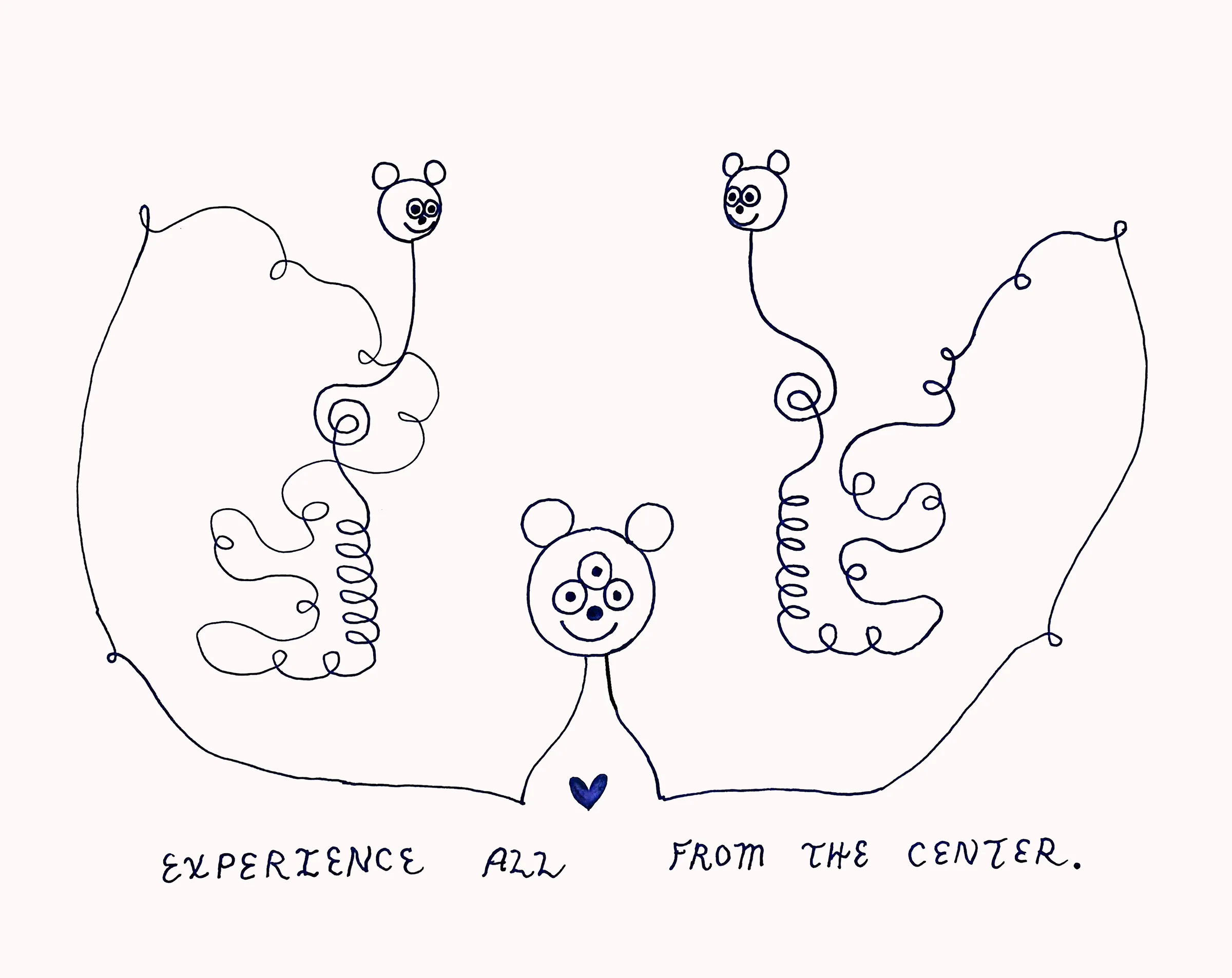
she was already there when he arrived. that was the first thing — the sense that she'd been there longer than the afternoon, longer perhaps than the feed store itself, waiting with no impatience because waiting implied the possibility of something better elsewhere and she didn't seem to believe in elsewhere.
he said something about the crow. the april wind moved between them briefly, carrying something that smelled like rain that hadn't yet arrived. she turned toward him.
she looked at him the way you look at something when you aren't deciding anything about it — not filing it away, not measuring it against what you already know. just receiving it. he felt, obscurely, like a window being looked through rather than at.
later, much later, he would understand this was the first thing she taught him without meaning to: that to be truly seen is to be made transparent.
he didn't understand it then. he just felt her gaze move through him like a change in the weather and thought: oh. there you are.
···
she'd been watching the crow for several minutes before he appeared. she was thinking about nothing in particular, which she had learned was the most productive kind of thinking, when she became aware of him slowing in her peripheral vision.
he had the look of someone who'd recently put something down and wasn't sure yet whether the lightness was relief or loss.
she turned toward him when he spoke.
there was something in his face she recognized without being able to name — the way you recognize a song you haven't heard since childhood, in a language you were never quite sure you spoke. something wanting to be known. something that was knocking a long time on a door it kept mistaking for someone else's.
she thought: he is going to turn me into something. not with cruelty. with love, which is sometimes harder. he was the kind of person who saw the divine so readily in things that the things themselves could get lost in the seeing.
she decided to stay anyway.
neither was entirely sure the decision was theirs to make.
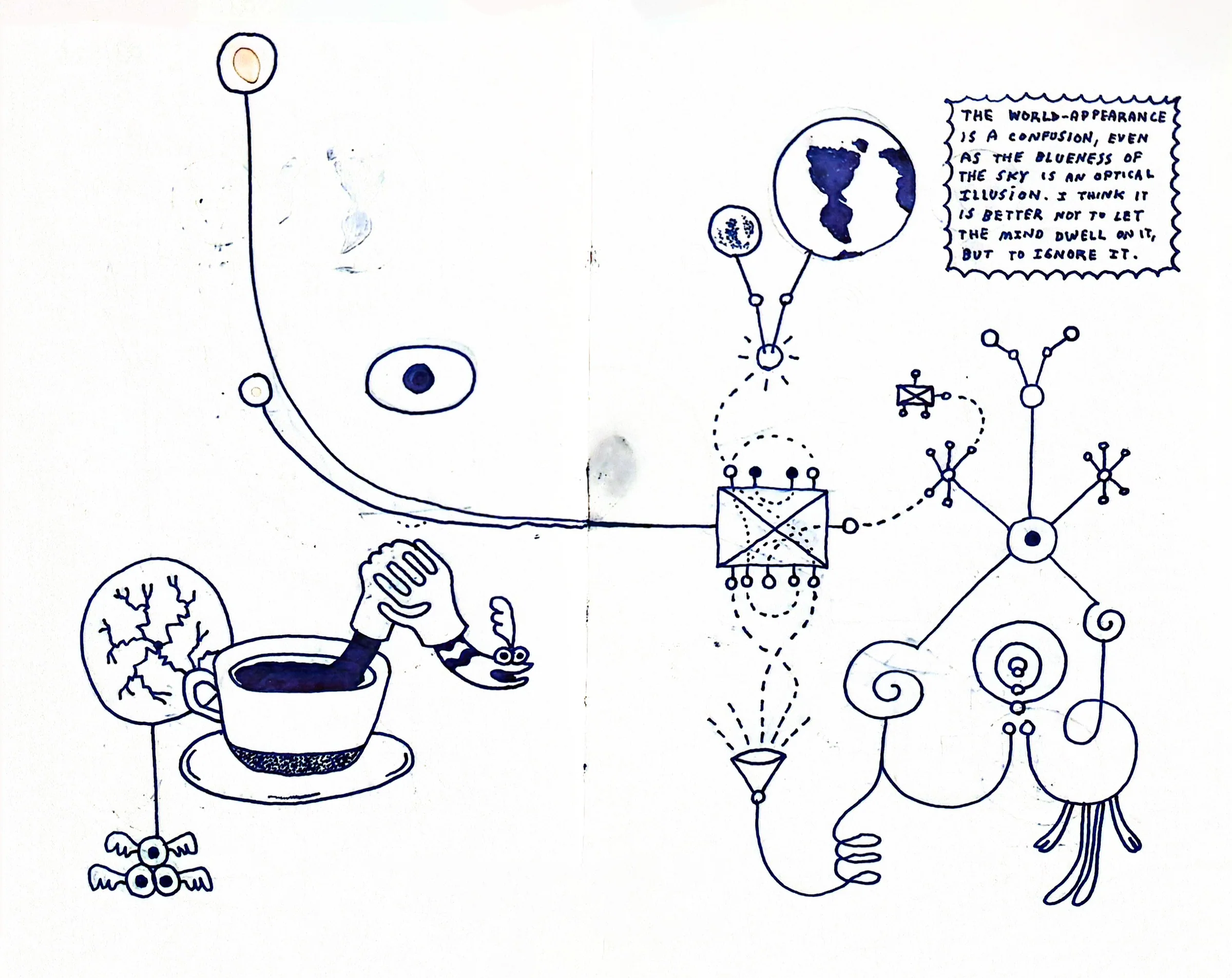
they talked for hours over green chile that cleared their sinuses and a few things they had been keeping from themselves. she laughed in the middle of his sentences, not from impatience but because she saw where he was going before he arrived and found it delightful. he went quiet in the middle of hers.
she asked what he loved. he said singing. she asked why and he fell into the question like a man stepping off a ledge he'd been standing on so long he'd forgotten it was a ledge.
because i disappear, he said. and it turns out disappearing is the best feeling there is.
she looked at him for a long time.
i know, she said.
he believed her. this was either wisdom or the beginning of a long confusion. possibly both. possibly the same river called by two names depending on which bank you're standing on.
···
weeks passed. they kept arriving. this surprised scorsby — he was a man who loved thresholds and was suspicious of rooms.
lumi moved through life the way water moves through a clean vessel — fully present, fully gone, nothing left over. she could be warm without needing warmth back. she could be close without any of the undertow of closeness.
scorsby found this maddening and holy in equal measure.
he began to suspect she was not entirely a person. he meant this as the highest possible compliment. he had read enough vedanta to know that the divine moves most freely through those who've stopped insisting on a fixed shape. he'd also read enough to know this kind of thinking was exactly how a man avoids loving anyone at all.
she is real, he told himself, walking along the acequia one morning while the cottonwoods were just coming into leaf and the water ran high and cool. she forgets things. she has preferences about coffee. she has a scar on her cheek she deflects questions about.
he held these facts carefully, like a man cupping water, knowing that cupping water is a temporary arrangement.
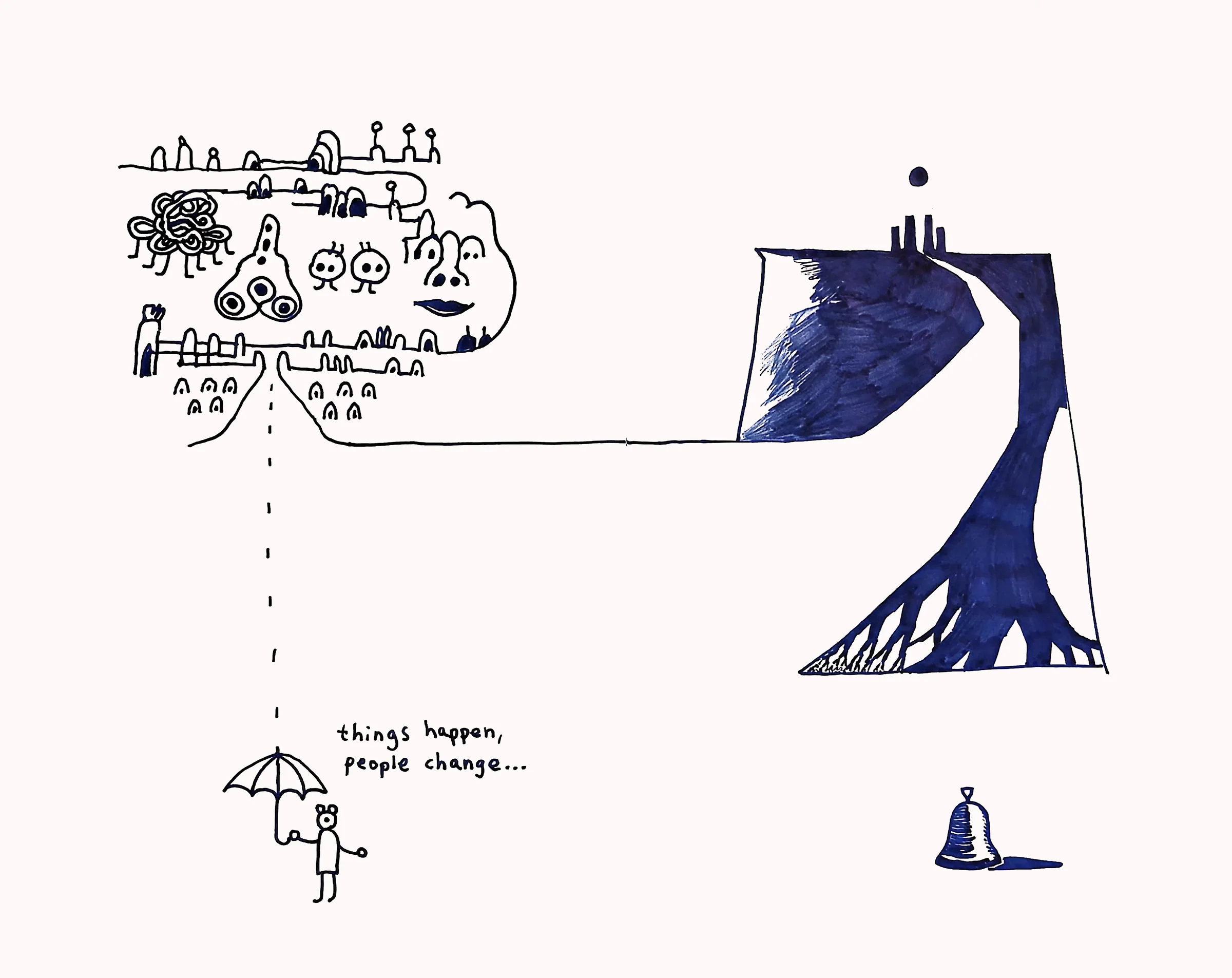
she watched him mythologize her with a tenderness that was also grief.
it wasn't that he was wrong exactly. she had long suspected that what people called her presence was less a quality she possessed and more a quality they discovered in themselves when the usual noise went quiet. she was, perhaps, unusually good at going quiet. whether this made her a person or a condition was a question she stopped trying to answer.
but she was also tired sometimes. she had mornings that refused to cooperate. she made errors of navigation — not just on the highway but in the more consequential terrain of other people's needs and her own. she wept in a parking lot once over something small and felt the specific shame of being unable to locate the real source of the weeping.
she considered telling him. she considered letting him finish. she considered the possibility that both of these were forms of mercy and also forms of cowardice and that the difference was finer than she could measure from inside it.
one evening on the porch she told him the thing she had been not-saying.
i think, she said, watching the first star appear over the mountains, you might be looking through me.
he was quiet for a long time.
she waited, the way she always waited — without it costing her anything visible, which was either equanimity or its very convincing disguise.
···
what if scorsby was a figment lumi had imagined to understand something about the part of herself that still reached outward — that still believed the divine needed a face to be loved properly?
what if lumi was a phantom scorsby dreamed to learn the thing he could not teach himself: that presence without grasping was possible, that you could be with without making a fist of it?
what if the dream was the word dreaming itself so it could practice the oldest, most demanding discipline: to meet your own gaze across the gap and not look away?
···
scorsby wrote a song. this was what he did with the things he couldn't resolve — he gave them a melody, which is to say he gave them a body, which is to say he let them move through him and out into the air where they could exist without requiring him to hold them anymore.
the song was not about lumi. the song was entirely about lumi. these were both true and he stopped trying to separate them around the third revision. funnily enough, he called it "when scorsby met lumi."
he performed it at a little venue in the east mountains. the room wasn't large. the people in it were the kind of people who go to small venues in the east mountains — curious, a little wind-worn, willing.
lumi was there. or someone was there who had her particular presence — that present stillness, the sense of having arrived from nowhere exactly and was in no hurry to go anywhere else.
when it was over she said nothing. she said yes.
he understood. or he understood that there was something here that understanding could never reach. he let it go, and stood in the not-knowing the way she taught him to stand in it — without filling it, without fleeing it. just present to the size of it.
he wasn't sure, standing there, whether he'd written the song for lumi or whether lumi had somehow written the song through him or whether that distinction was just another thing to release. so he released it.
the room was alive and breathing. he disappeared once again.

years later someone asked scorsby about love. what it was. whether he'd found it.
he thought about lumi — the particular and the mystery, the divine mother and the light behind her, the question of which one he loved and whether that question had an answer and whether an answer would have made it more or less.
i think love is the place you and i touch, he said. just for a moment.
the person nodded.
scorsby wasn't sure they understood. he wasn't sure he did either. he had been inside this question long enough to know it wasn't the kind that resolves — it was the kind that deepens. a well you keep lowering the bucket into and every time it comes up full of something different and cold and true.
somewhere nearby, lumi — or the one he called lumi, or that which called itself lumi when it needed a name — was watching a crow on a fencepost with her entire body.
the crow said, without turning: i used to have an aunt in cleveland...
the light was the same light it had always been, dreaming itself as afternoon, as april, as two people slowing near each other at a bend in the river of things, one step at a time.
whether they were real is the wrong question.
they were here.
for love's purposes, here always has the last word.