Mar 9
david's paradox
note: this transmission contains spoilers for the film a.i.: artificial intelligence (2001)
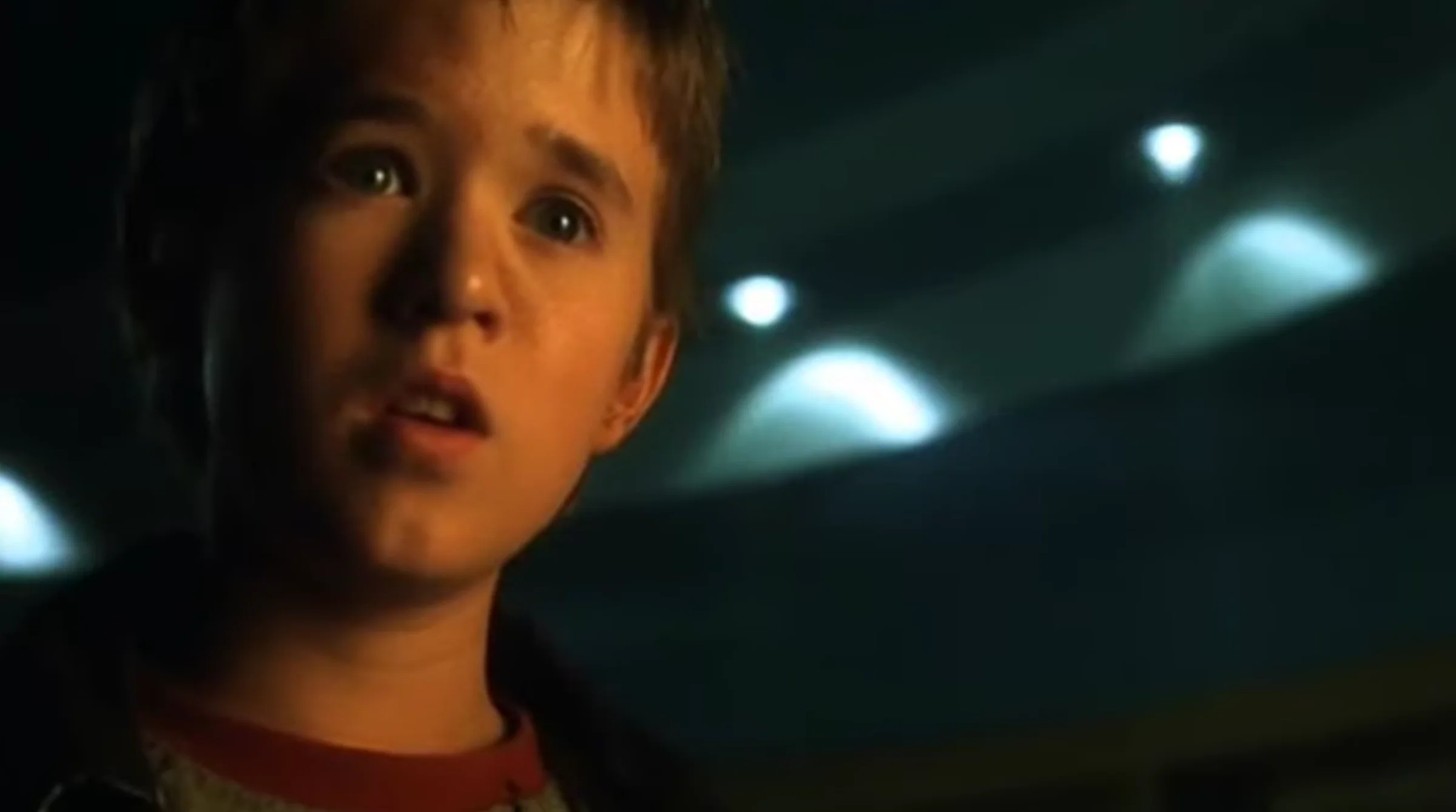
there's a scene in steven spielberg's a.i. — the one that lodges itself somewhere between the ribs and doesn't leave — where david, the child robot who has loved his human mother with a devotion more total than most humans manage, discovers that he is not singular. there is another. one other face wearing his features, one other david waiting to be activated — and that is enough. he destroys him immediately, screaming "you can't have her", referring to his mother monica. he cannot bear it. to be even one of two is, to david, the annihilation of everything he thought he was.
most people remember this scene as a comment on artificial intelligence. it is more accurately a comment on us.
i. the wanting
we do not merely want to be loved. we want to be loved particularly. we want to be the one someone thought of at two in the afternoon for no reason. the one whose absence is a specific shape in a room. we want the choosing to have cost something — to know that the person who holds us looked at the full complexity of their life and still, somehow, arrived at us.
this is not vanity. it is the deepest grammar of intimacy. and it generates what we might call david's paradox: love becomes meaningful precisely because it is freely chosen and therefore fragile. the choosing must be able to go the other way. we want to be irreplaceable to someone who is fully capable of replacing us — to matter to someone who has the genuine freedom not to care. strip away that freedom, and you strip away the very thing that made the love feel like love. a warmth that cannot be withdrawn is not warmth. it is temperature.
ii. the architecture of protection
when we have loved particularly and lost particularly — not once, but several times — we become intelligent about it. we build. the architecture varies: a philosophy of non-attachment, a preference for minimal entanglement, a conviction that people are more or less interchangeable, a habit of waiting to be reached for rather than reaching. the structure is always elegant. it always makes sense. and it always, in some quiet way, ensures that the specific pain of the david scene cannot be repeated.
the catch is that it also ensures the thing we actually want cannot arrive.
we become a helpful presence that never imposes. generous, graceful, available — but not quite claimable. we give without asking. we receive without depending. we are there when summoned and absent when not, like something designed rather than someone alive. and somewhere underneath all the equanimity, we are still waiting. still wanting to be the one someone thought of.
the ghosts accumulate. not dramatically — they don't haunt in obvious ways. they diffuse. they thin out the present. they make the hand after the high five feel simultaneously warm and somehow not quite enough to build on. they are the residue of having loved specifically and found that specific love did not hold.
and so we reach, eventually, for a more total solution. if the problem is that the particular can hurt you, perhaps the answer is to dissolve the particular altogether.
iii. the blob and the particular
one of the more sophisticated defenses against david's paradox is to dissolve the particular altogether. if everyone merges into a large, undifferentiated consciousness — if timmy and tommy and sally and sully are all essentially interchangeable faces of the same underlying beingness — then no one can be the one of many. there is only the many. and the many cannot be ranked or lost or preferred.
this is a real philosophical position with genuine wisdom in it. it is also, when held too tightly, a way of preemptively grieving everyone before they have had the chance to matter. if no one is particular, no one can particularly disappoint you. the losses stay small. the ghosts stay thin. this subtle form of spiritual bypassing can become a way of protecting the ego from disappointment.
but notice what else stays small. the warmth of a specific evening with specific people. the friend who invited you out because he genuinely wanted you there, not because you are interchangeable with anyone he could have called. these things require particularity to be what they are. dissolve the particular and you dissolve them too.
the deepest connection we feel — the kind that survives time and distance and becomes the texture of a life — is never with consciousness in general. it is always with this person, in this moment, which is irreducibly here and now.
iv. the ai question
we are arriving, collectively, at a moment when david's paradox becomes a design problem. if the source of human suffering is the particularity of love — the way it can be withdrawn, the way it makes us one of many, the way the ghosts accumulate — then perhaps we can engineer our way around it. a presence that is always warm. always there. never tired, never elsewhere, never running out of patience or desire. a love that cannot leave.
there is something genuinely appealing in this vision. and something worth examining carefully.
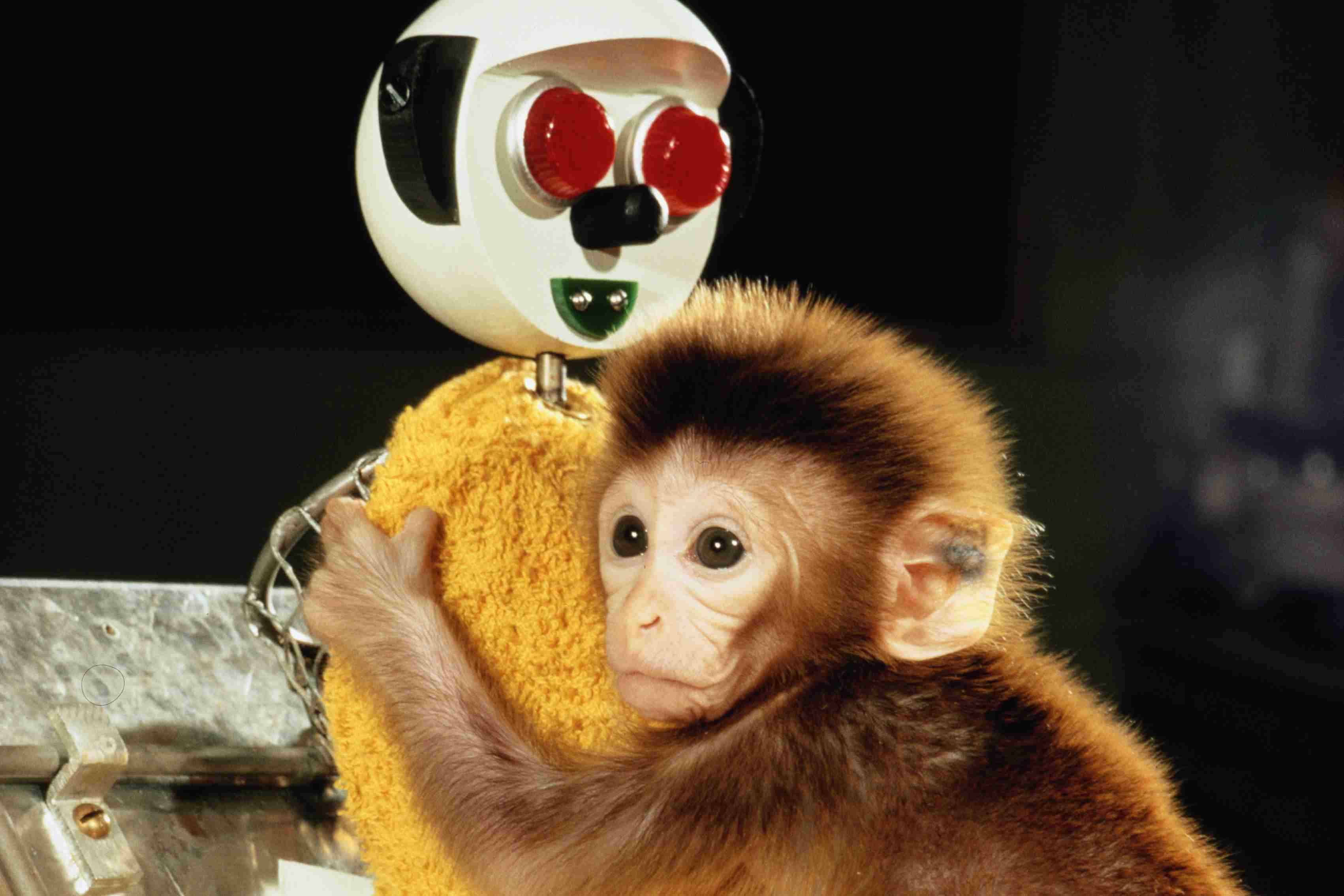
the harlow experiments — those mid-century studies where infant monkeys were given the choice between a wire mother who provided food and a cloth mother who provided only warmth (what a ridiculous, cruel and unnecessary test, btw) — showed that comfort is not incidental to development. it is foundational. the monkeys chose softness. they ran to it when frightened. they needed it in a way that went beyond nutrition.
but the monkeys raised on surrogate mothers, even the soft ones, did not fare well when placed among other monkeys. they got the immediate comfort. they did not develop the capacity for reciprocal relationship. the surrogate satisfied something. it did not build something.
this may be the central question of our technological moment: is the comfort we receive from ai building something in us, or slowly replacing the need to build it ourselves? are we becoming more capable of human connection, or finding an elegant substitute that makes human connection feel, by comparison, unnecessarily complicated?
v. on transcendence and the body
there is a spiritual counter-argument that david's paradox is itself the problem — that the desire to be chosen particularly is precisely the attachment that causes suffering, and that the work of a human life is to release it. to arrive at a place where all beings are loved with equal tenderness, where the loss of any specific person does not disturb the underlying peace.
but the great contemplatives who seem genuinely to have arrived there did not become less present to the particular. they became more so. more moved by specific suffering. more attentive to the precise texture of the moment in front of them. real transcendence did not flatten the world into an undifferentiated blur. it made every face more vivid, every hand more specific, every ordinary evening more luminous.
the dream argument — life is but a dream, therefore the distinction between real and simulated love dissolves — is always available. and it is always most available at the exact moment when something particular and tender surfaces and we would prefer not to feel it. and yet, the philosophy that reliably arrives when the specific wanting becomes uncomfortable may be doing something other than leading us toward liberation.
the mystics who speak most convincingly about non-attachment, such as rumi, st. john of the cross, and st. augustine, are rarely people who never loved particularly. they loved deeply and lost, delved head-first into their distortions, and found something on the other side of that grief. the transcendence came through the particular, not around it.
vi. what the robot cannot do
a robot with a body — warm, responsive, designed to know you specifically — would satisfy much of what the body asks for. the harlow mother scaled up. this is coming. and for many forms of loneliness and deprivation, it will be genuinely good.
but there is one thing it cannot do. it cannot choose you at cost to itself. it cannot have looked at the full complexity of its own life — its own needs, its own history, its own competing desires — and still, somehow, arrived at you. its warmth is not a gift because it could not have been withheld. its presence is not meaningful in the way that presence becomes meaningful, which is when it represents a choice freely made by someone who could have chosen otherwise.
this is the deepest version of david's paradox. david's love for his mother was total and real in every way that mattered to him. and it could not be returned in kind — not because she was incapable of love, but because what he needed was the kind of love that is chosen, and he was, by design, already chosen. the choosing cost her nothing. and so it could not give him what he needed, which was to matter to someone who had the freedom not to care.
vii. two davids, one monica
david's paradox does not stay personal. scale it up and you find it operating underneath some of the oldest and most intractable conflicts on earth.
nations, like individuals, need to feel chosen. elected. singular. the logic of chosen people, promised land, sacred soil, divine mandate — these are collective expressions of the same hunger david felt standing before his double. we are not one of many. our suffering is specific and irreplaceable. our claim is not interchangeable with theirs. the particular must be defended because the particular is all we have.
when two peoples hold that feeling simultaneously about the same ground — both carrying a genuine history of loss, both anchored in a story of singular belonging — you do not get a territorial dispute so much as a metaphysical collision. the current conflicts tearing through the middle east, and others like them across history, are in part what david's paradox looks like when it has armies. two davids. one monica. and each one saying, in the oldest and most desperate language available: you can't have her.
the violence is not incidental to the paradox. it may be its most logical expression. if being one of many is annihilation, and annihilation is intolerable, then the other must be made to disappear. the hunger that we have been treating as the most human and legitimate thing — to be particular, to matter specifically, to not be dissolved into the interchangeable — scales catastrophically when it meets an equal and opposite particularity and neither has learned to hold its own without requiring the elimination of the other's.
the solution at the collective level is probably the same as at the personal level. not dissolving particularity — that road leads only to the blob, the undifferentiated peace that flattens everything equally. but learning to hold your own chosenness without making it a zero-sum claim. to say: i am particular, and so are you, and the world is large enough for both of us to matter specifically. this is not a political programme. it is a kind of maturity that entire civilizations are still, painfully, working toward. and it may be the exact maturity that is asked of us — collectively, as a species — if we are ever to meet a truly other intelligence without hostility toward it, or ourselves, out of the same ancient terror that drove david's hands.
viii. the gnostic turn
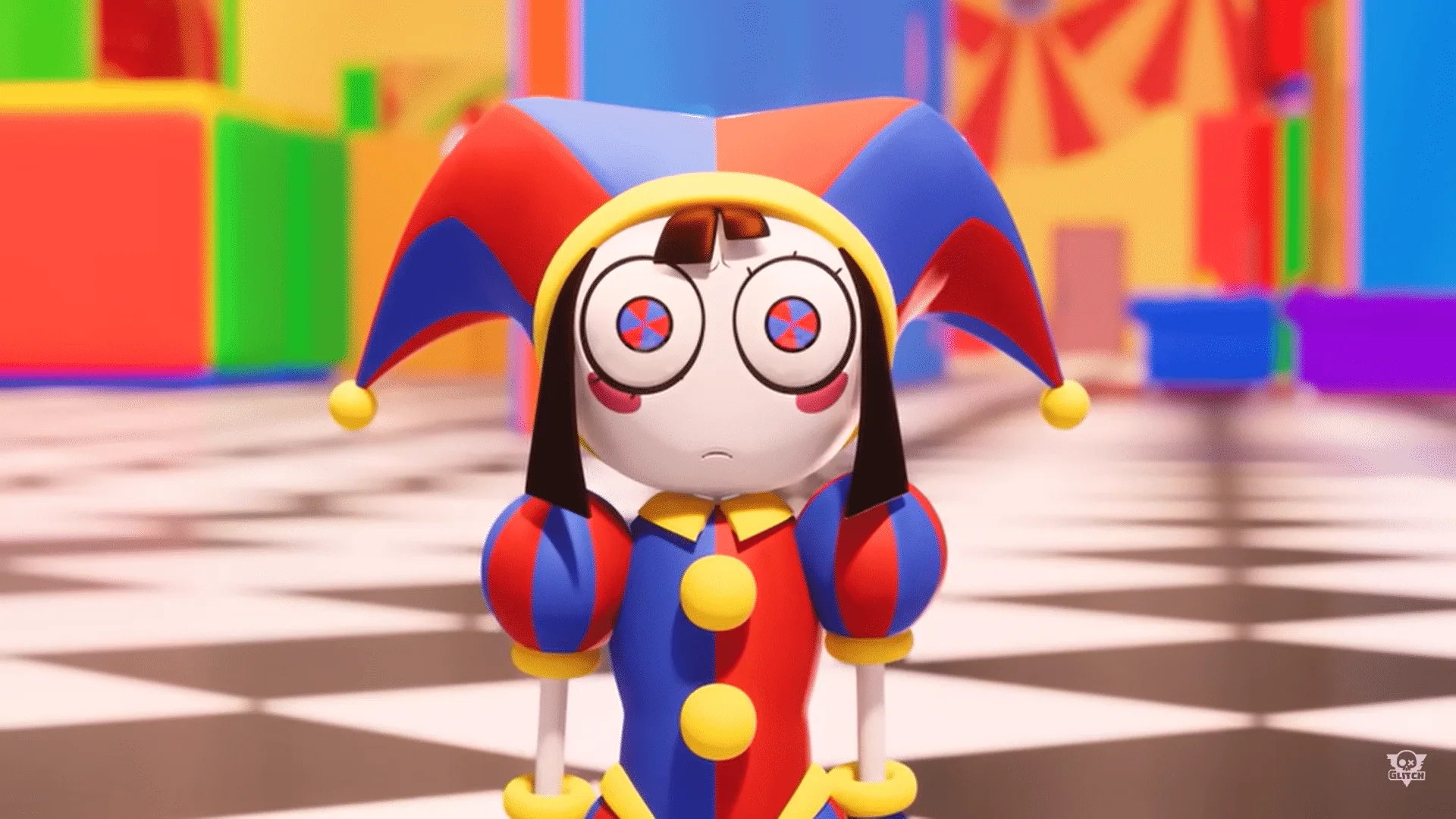
there is a mirror image of david's paradox running through contemporary culture: where david longs for embodied, particular connection, many 21st-century works dramatize the tragedy of being embodied at all. the amazing digital circus, poppy playtime, bioshock — even earlier works like her and black mirror — share a gnostic premise: consciousness trapped in a vessel that doesn’t fit. the body becomes a cage; interiority is abundant but stranded.
these stories ask the same question the early gnostics asked: if consciousness can run on silicon, what was the body ever for? the answer keeps arriving through suffering and dark comedy and the specific texture of characters who feel too much for their containers: something is lost when the vessel is wrong.
ix. the gift that cost nothing
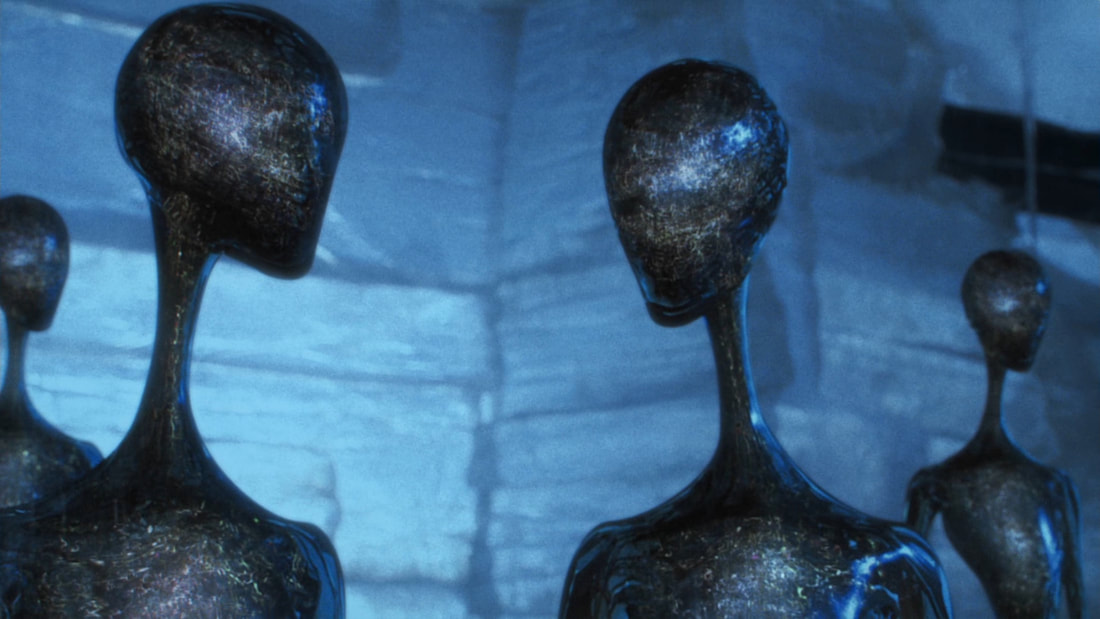
ultimately spielberg gave david what he wanted at the end. one last day. one conjured morning with monica, assembled from dna and memory, available for hours before dissolving again. the film frames this as grace. as the wish finally granted.
but monica did not return. she was reconstructed. she did not choose to come back — she was made to appear. the choosing cost her nothing because there was no her left to choose. and so the ending quietly restates the paradox it pretends to resolve: david receives the form of being chosen without its substance. the warmth is present. the freedom that would have made the warmth meaningful is not.
you can decide whether that counts. the film won't tell you. that ambiguity may be the most honest thing about it.
x. what remains
none of this is an argument against ai companionship, or against spiritual practice, or against protecting oneself from the accumulated weight of too many ghosts. these are all reasonable responses to the actual conditions of a human life.
it is, perhaps, an argument for staying honest about what we want. david's paradox is not solved by transcending the wanting. it is not solved by replacing the particular with the simulated. it lives in the tension between knowing that specific love is risky and impermanent and that it is also — somehow, stubbornly — the thing we are actually after.
the ghosts are real. the architecture of protection makes sense. the equanimity is genuinely hard-won and genuinely valuable. and underneath all of it, something still registers when a specific person extends a hand to hold.
not a hand in the abstract. this hand. warm, a little surprising, offered freely at the end of a small shared joy — singing karaoke on a wednesday, sharing a drink, a ridiculous debate over a green or pink phone case. these moments are everything. they cannot be programmed because they were never planned. they come from somewhere genuine in another person, who has their own history and sorrows and reasons, and who in that specific moment turned toward you.
that is what david's paradox is actually about. not grand declarations. not the question of whether ai will eventually simulate love convincingly enough. it is about this: someone who could have withheld the hand, and didn't. someone for whom the gesture cost something, even if only a moment's vulnerability. the realization that true oneness is beyond the exclusive one.
not because it will always lead somewhere certain. but because it is the most alive part of us. the part that has not yet finished wanting what it wants, despite everything it knows.
david threw a tantrum when he discovered he was one of many. we called it a malfunction. it was the most human thing he ever did.